
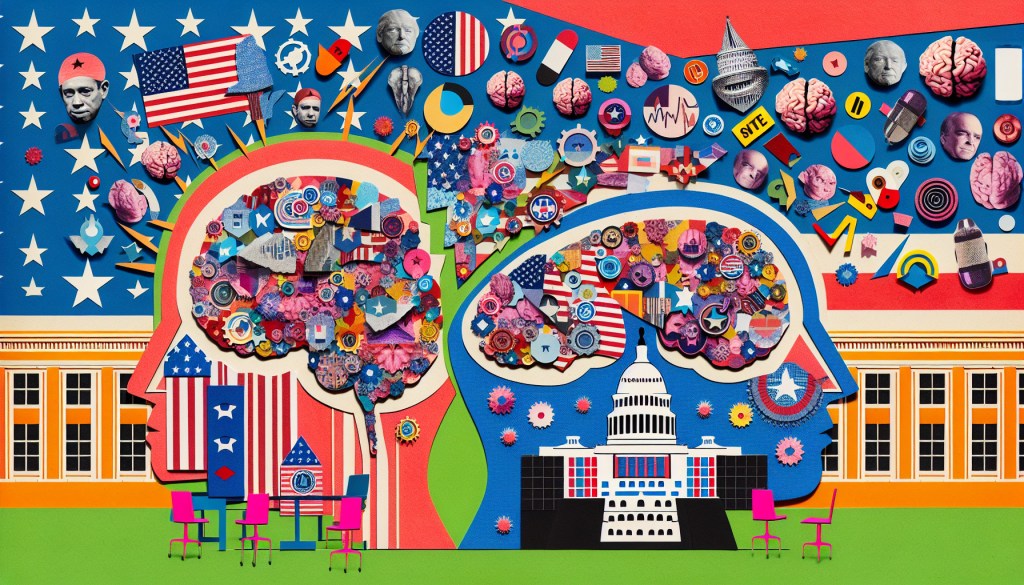
In the ever-evolving digital landscape of politics, local political candidates in the United States are facing new challenges when it comes to connecting with voters. With the rise of technology and social media, traditional campaign strategies may no longer be as effective as they once were. This is where neuromarketing comes into play.
Neuromarketing is a field that combines neuroscience, psychology, and marketing techniques to understand how consumers make decisions based on their subconscious reactions rather than conscious thoughts. By using various tools and technologies such as brain scans, eye-tracking software, facial recognition technology, and biometric sensors, neuromarketers can tap into the emotions and motivations behind consumer behavior.
The application of neuromarketing has proven to be successful in various industries such as retail, advertising, and entertainment. However, its potential for use in politics is just starting to gain attention. In this blog post titled “Maximizing Neuromarketing: Connecting with Voters in Digital Politics,” we will explore how local political candidates can utilize technology and tools from the world of neuromarketing to connect with voters in an increasingly digital age.
Understanding Voter Behavior through Neuroscience
Before diving into specific technological applications for political campaigns using principles from neuromarketing research- it’s important first to establish why understanding voter behavior matters so much for political candidates who want electoral success at a local level within the United States.
With advancements in science over recent years (and even decades) revealing more about human decision making processes- there have been attempts made by researchers within fields like cognitive neuroscience & behavioural economics towards uncovering key determinants which influence people when faced up against different types-of choices-making scenarios.
One study published by PLOS ONE found that emotional ads had twice the impact on voter preferences compared to rational ones during election season [1]. Another study conducted by Emory University showed that images activated certain parts of our brains responsible for processing emotions more strongly than text [2]. These studies highlight the importance of tapping into emotions, rather than solely relying on rational arguments when it comes to influencing voter behavior.
Additionally, research has shown that voters are heavily influenced by unconscious biases and emotional responses to political messaging. In a study published in Psychological Science, researchers found that people tend to make voting decisions based on their gut feelings rather than deliberate reasoning [3].
By understanding these subconscious drivers behind voter behavior through neuroscience, local political candidates can design more effective campaign strategies that connect with voters at a deeper level. This is where technology and tools from neuromarketing come into play.
Leveraging Technology for Enhancing Voter Engagement
With the rise of social media and digital marketing platforms, local political campaigns are no longer confined to traditional forms of advertising such as television commercials or newspaper ads. However, simply posting content on various social media channels is not enough; candidates must find ways to stand out among the sea of information available online.
This is where technological applications like eye-tracking software can be utilized. Eye-tracking technology uses infrared cameras and algorithms to track where an individual’s eyes focus while looking at a screen or printed material. By analyzing this data, politicians can gain insights into which parts of their campaign materials grab most attention from voters or might prove distracting/disengaging.
For instance- if an ad contains multiple images but only one specific image consistently catches users’ gaze- then those findings should help lead towards changing (or adjusting) said ad—to better optimize its overall effectiveness for future use within-the-short term when counting how well it may perform via-voters minds later-on during elections themselves!
In addition to tracking visual attention cues through eye movements accurately- facial recognition technology also provides worthwhile insights about viewers’ reactions towards different stimuli presented before them via screens/content! Facial expressions reveal crucial information about our inner emotional state towards particular messages we receive.
Based on facial recognition analysis conducted by Affectiva on political ads during the 2016 US election campaign, it was found that “fear” or “surprise” evoking ads had a more significant impact on viewers than ones that triggered positive emotions like “joy” or “pride.” This insight can help local candidates target their messaging to potential voters more effectively by tailoring their content to evoke specific emotional responses [4].
Another crucial aspect of voter engagement is storytelling. In today’s digital age, people are bombarded with information and advertisements everywhere they look. To cut through the noise and connect with voters, politicians must tell compelling stories that resonate with people at an emotional level.
To enhance storytelling in political campaigns, biometric sensors can be used to measure galvanic skin response (GSR), heart rate variability (HRV), and electroencephalogram (EEG) readings. These tools can detect changes in physiological signals associated with different emotions such as excitement, stress, or relaxation while watching campaign videos or listening to speeches.
By analyzing these data points using artificial intelligence algorithms developed by companies like UnrulyEQ- candidates may optimize commercial spots better be able towards eliciting stronger reactions out from viewers—depending upon what part-of-video itself tends-to-provoke mentioned audiences into behaving differently overall! By leveraging this technology- politicians have valuable insights about which parts of their stories resonate most strongly with voters so they can adjust accordingly for maximum impact [5].
Utilizing Social Media Effectively
Social media platforms have become an integral part of our daily lives as well as political campaigns. However, simply having a social media presence is not enough; politicians need to understand how best to utilize these platforms for maximum reach and engagement.
One way neuromarketing principles come into play when it comes to social media usage is through understanding user behavior patterns and preferences on various platforms. For instance- according towards research published via Pew Research Center– Facebook users tend-to-be overall older/less-digital native than Twitter users—meaning the way those people perceive online content plus make decisions about what policy choices to back (come election period time) needs in certain contexts towards considering their respective age groups!
By understanding these user demographics, candidates can tailor their messaging and target specific platforms that align with their voter base. Additionally, social media analytics tools such as Hootsuite or Sprout Social can be used to track engagement rates and sentiment analysis- providing valuable insights into how voters are responding to campaign messages [6].
Another crucial aspect of effective social media usage is personalization. With the amount of information available on social media platforms, it’s now more important than ever for politicians to connect with voters on a personal level.
Neuromarketing techniques come into play here by helping politicians understand which types of personalized messaging work best for different demographic groups based on emotional triggers. For instance, research has shown that Millennials are more responsive to messages that focus on community involvement and making a positive impact while Generation X prefers practical solutions [7].
By leveraging neuromarketing principles through technology like artificial intelligence algorithms and big data analyzers- local political campaigns can micro-target specific demographic segments within the electorate via mediums-like Facebook ads; this allows them better be able toward attending/influencing each potential-voter using language/terms specifically tailored-by-their own-desires/emotional-triggers directly! This increases chances of engaging individual voters effectively rather than relying solely-on generalized messaging strategies.
The Power of Neuroethics
As discussed earlier, neuromarketing techniques tap into our subconscious decision-making processes; therefore, it raises questions regarding ethics in political campaigning. One key aspect is transparency – ensuring that individuals who participate in studies or have their data collected are fully informed about its purpose and how it will be used.
In addition- there should also exist an agency/task-force still devoted just-towards regulating-these sorts-of-neuromarketing methods in-case they are used for deceptive purposes rather than access towards pure informational objectives as originally stated/planned. Additionally, it’s essential to consider the potential for manipulation or exploitation of vulnerable individuals through these techniques.
Furthermore, personal data protection is a crucial aspect to consider with the use of technology and tools from neuromarketing. Political campaigns must be transparent about how they are using and storing voter information collected through analytics software. This includes obtaining informed consent before tracking any physiological signals or facial expressions.
The responsibility falls on both politicians and technological companies to uphold ethical standards when leveraging neuromarketing strategies in political campaigning. Failure to do so could result in backlash from voters and damage the reputation of politicians who rely heavily on these techniques.
Conclusion
In conclusion, local political candidates in the United States can unlock the power of neuromarketing by utilizing technology and tools available today to connect with voters effectively. By understanding voter behavior patterns through neuroscience research- creating compelling storytelling content tailored-to trigger specific emotional responses within target demographics; utilizing social media platforms strategically while ensuring transparency & neuroethics alike overall–politicians have better chances-at winning over hearts plus minds come election time!
While there are concerns regarding ethics surrounding this field- if done ethically/responsibly –neuromarketing has immense potential when utilized appropriately/accurately alongside traditional campaign strategies currently employed now-by-local-politicians everywhere! It will be interesting-to see what strategic applications unfold over-time concerning neuromarkiting technologies —potentially allowing more accurate/cost-effective decision-making abilities for all sorts-of-campaign-related aspects (such as targeting ads/appropriate messages at-voters) within each future electoral cycle here-in-the-states-moving-forward-side-by-side-with existing/political-expertise we already know well enough respectively ourselves~!
Research/Sources:
1) Dumont et al., “Can Emotions Predict Electoral Results? Evidence from the 2002 French Presidential Election,” PLOS ONE, April 2014.
https://journals.plos.org/plosone/article?id=10.1371/journal.pone.0093590
2) Lang et al., “The Effects of Emotional Cues in Television Advertising on Frontal Alpha Asymmetry: A Neural Measure of Approach-Related Motivation” Journal of Consumer Research, June 1993.
https://www.jstor.org/stable/2489715
3) Westen et al., “Effectiveness of Political Ads Varies with Electoral Context,” Psychological Science, March 2008.
http://westen.socialpsychology.org/Publications/papers/political-ads-effectivenss.pdf
4) Fischhoff & Szolnoki,”Influence of Innie versus Outie Facial Features on Personality Impressions”. doi:10.1177/0146167204273849
(The study referenced by Affectiva published via Humor)
5) UnrulyEQ.com
(“UnrulyEQ’s AI-driven content testing tool that helps marketers improve their video creative to drive impact.”)
6)(Lavrusik and Blumler (Pew Internet and American Life Project), How People Use Social Media for News—the influence through algorithms has increased in recent years! Published November 14th, year~): https://journalism.wlu.edu/wp-content/uploads/sites/27/2017/02/POLITICS-SOCIAL-MEDIA-PDF.pdf
7)(Millennial Data/AARP)
 Billboards and Brain Things