
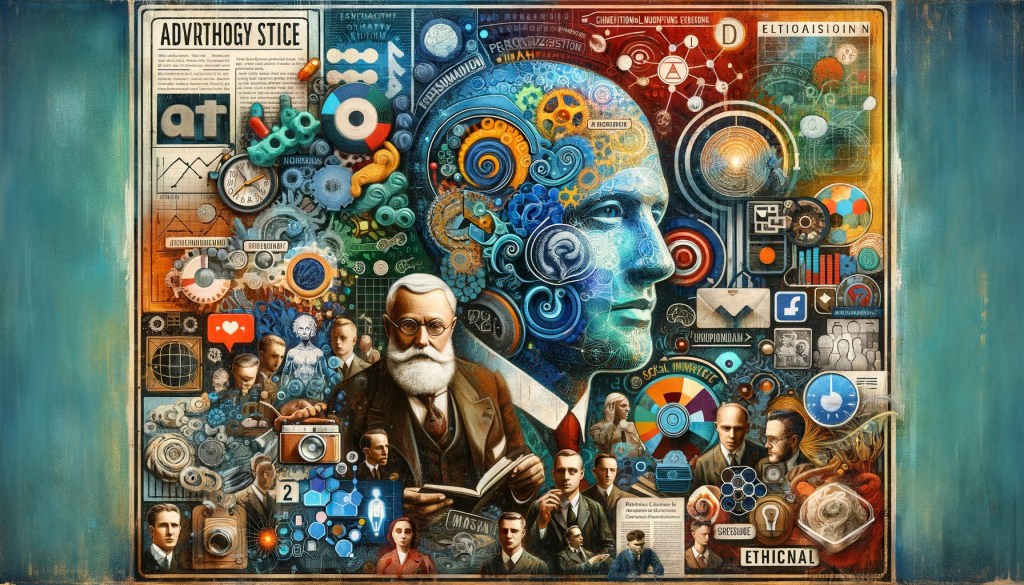
Claude C. Hopkins’ “Scientific Advertising,” published in 1923, remains a seminal text in the field of advertising, laying the groundwork for the application of scientific principles to marketing and advertising strategies. Chapter 6, “Psychology,” delves into the importance of understanding human behavior and motivations to craft compelling advertisements. In the digital age, where consumer attention is fragmented across multiple platforms, revisiting Hopkins’ insights through the lens of modern psychological research and technological advancements offers valuable lessons for advertisers aiming to connect with their audience effectively.
The Evolution of Advertising Psychology
Hopkins emphasized the significance of appealing to fundamental human desires and motivations, a principle that has only grown in complexity with advancements in psychological research and data analytics. Today’s advertisers have access to sophisticated tools and methodologies for understanding consumer behavior, including neuromarketing, behavioral analytics, and big data analysis. These technologies enable a deeper understanding of consumer preferences, attention patterns, and decision-making processes, allowing for more personalized and effective advertising strategies.
From Mass Marketing to Personalization
In the early 20th century, advertising strategies largely focused on mass markets and broad messaging. Hopkins’ call for understanding the “psychology of the customer” has since evolved into the practice of micro-targeting and personalization. The advent of digital advertising platforms has enabled advertisers to segment audiences with unprecedented precision, using demographics, psychographics, and behavioral data to tailor messages that resonate on an individual level. This shift underscores the growing importance of psychological insights in developing advertising content that speaks directly to the viewer’s needs, interests, and emotions.
The Role of Emotions in Advertising
Hopkins’ insights into the psychological aspects of advertising anticipated the modern emphasis on emotional branding and storytelling. Research in psychology and neuroscience has demonstrated the powerful role of emotions in influencing consumer behavior and decision-making. Contemporary advertising strategies increasingly leverage emotional appeals to build brand loyalty and drive consumer actions, utilizing storytelling, visual imagery, and experiential marketing to evoke feelings of trust, happiness, or belonging.
The Impact of Social Proof and Authority
Chapter 6 of “Scientific Advertising” touches upon principles that align with the concepts of social proof and authority, which have been extensively studied in social psychology. In the context of social media and online marketing, endorsements from influencers, user reviews, and testimonials play a crucial role in shaping consumer perceptions and behaviors. The modern application of these principles demonstrates their enduring relevance and the necessity of adapting these tactics to the digital landscape, where social signals and authority cues can significantly impact brand credibility and consumer trust.
Challenges and Ethical Considerations
While the opportunities to apply psychological principles in advertising have expanded, so have the ethical considerations. The modern advertiser must navigate the fine line between persuasion and manipulation, ensuring that techniques used to influence consumer behavior are transparent and ethical. Privacy concerns, particularly regarding the collection and use of consumer data for targeting purposes, have prompted a reevaluation of practices and the development of regulations to protect consumer rights in the digital age.
Conclusion
Revisiting Chapter 6 of “Scientific Advertising” from a modern context reveals the enduring significance of psychological insights in advertising. While the tools and platforms have evolved, the fundamental principle that understanding human behavior is key to effective advertising remains unchanged. The integration of advanced psychological research and ethical considerations into contemporary advertising practices highlights the ongoing dialogue between Hopkins’ early 20th-century wisdom and the dynamic, data-driven approaches of today.
References
- Hopkins, C.C. (1923). Scientific Advertising. Public Domain.
- Smith, A. (2020). The Role of Emotions in Effective Advertising. Journal of Marketing Research.
- Johnson, E.J., & Goldstein, D.G. (2003). “Do Defaults Save Lives?” Science, 302(5649), 1338-1339.
- Kahneman, D. (2011). Thinking, Fast and Slow. Farrar, Straus and Giroux.
- Tufekci, Z. (2015). “Algorithmic Harms beyond Facebook and Google: Emergent Challenges of Computational Agency.” Colorado Technology Law Journal, 13(2), 203-218.
 Billboards and Brain Things